Best made in USA dresses in 2026
Best overall for a bold linen dress: Long Agnes Dress in Red Linen. Best for a dark neutral: Prairie Dress in Black Linen; best for a belted floral look: Belted Bias Dress in Brick Red Floral Crepe—three made in USA dresses to compare by fabric, color, and how you want to dress.
- Field Day suits women seeking sustainably made, USA-manufactured dresses, with an apparel range spanning XS–5X.
- Long Agnes Dress in Red Linen is the first pick for a bold linen look.
- Prairie Dress in Black Linen is the dark-neutral choice among these made in USA dresses.
- Belted Bias Dress in Brick Red Floral Crepe is the pick for a belted floral look.
- Check each dress’s measurements and care instructions; the brand’s size range is not a guarantee for every style.
Why this matters
A domestic manufacturing claim answers where a dress is made. It does not tell you whether the waist sits comfortably, the fabric suits your day, or the care instructions fit your routine. Those decisions still belong to you.
Field Day is best for women seeking sustainably made, USA-manufactured dresses with petite and plus-size options. The Field Day apparel range spans XS–5X, and the business serves customers from its Nevada City, California showroom. Check the individual garment rather than assuming every dress follows the same size offering.
This 2026 guide compares dresses within that collection, not competing manufacturers. The recommendations separate distinct preferences: red linen, black linen, and belted floral crepe. They are style-based choices, not results from wear testing.
What makes the best made in USA dresses
Use these criteria before choosing a favorite. A dress needs to pass your practical checks, not simply look good in a photograph.
- Manufacturing origin: Look for a clear statement about where the garment is made. A brand’s address alone does not establish manufacturing origin.
- Usable fit information: Compare garment measurements, size guidance, and the shape shown in photographs. A familiar size label is only a starting point.
- Fabric identification: Read fiber content separately from fabric names. Linen, challis, and crepe do not describe interchangeable materials.
- Wardrobe compatibility: Decide whether you need a dark neutral, a strong solid color, or a print. Give the dress an actual role among clothes you wear.
- Care requirements: Read the garment’s instructions before deciding. A preferred fabric is not a practical choice if its care requirements do not suit you.
- Construction details: Check the neckline, closures, sleeves, waist treatment, and pockets individually. Do not assume a feature exists because another dress has it.
For your 2026 shortlist, put fit ahead of color. You can enjoy a beautiful shade and still reject the dress if its measurements or construction do not work for your body.
Made in USA dresses at a glance
The table ranks these dresses by a distinct use case. The limitations are wardrobe trade-offs, not claims about defects or construction quality.
| Dress | Best for | Standout detail | Key limitation |
|---|---|---|---|
| Long Agnes Dress in Red Linen | A bold linen look | Red linen | Not the choice when you specifically want a dark neutral or floral print |
| Prairie Dress in Black Linen | A dark-neutral wardrobe | Black linen | Does not supply the color or pattern of the other picks |
| Belted Bias Dress in Brick Red Floral Crepe | A belted floral look | Belted bias style in floral crepe | Not the choice for someone seeking plain linen or no belt |
Do not read these positions as a universal quality ranking. Start with the row that matches your wardrobe, then check the individual dress’s details. A lower-ranked option is the better purchase when its use case matches yours.
1. Long Agnes Dress in Red Linen: best for a bold linen look
Long Agnes Dress in Red Linen is the default recommendation when you want linen and a strong solid color. Red supplies the visual emphasis without introducing a floral pattern.
Choose this dress because red belongs in your wardrobe, not because it appears first. If your favorite layers and shoes already work with red, you have a clear starting point for an outfit.
Long Agnes Dress in Red Linen pros
- The product name identifies linen, giving you a specific material to investigate.
- Solid red provides color without a printed motif.
- It offers a distinct alternative to the black linen and floral crepe picks.
Long Agnes Dress in Red Linen cons
- Red does not meet a brief for a black or understated neutral dress.
- Linen naturally wrinkles; choose it with that characteristic in mind.
Best for: You want a red linen dress and prefer a solid color over florals.
Before choosing, check the actual length against a dress you enjoy wearing. The word “Long” in the name is not a substitute for a garment measurement, especially when you are choosing around your height or preferred hem position.
Also check how you want the dress to sit through the torso. Neither a product name nor a fabric label establishes the amount of room at the bust, waist, or hips. Compare measurements and photographs together.
For 2026, treat Long Agnes Dress in Red Linen as a purposeful color choice rather than an automatic wardrobe basic. Verdict: Buy if red linen is the brief; skip if you need a dark neutral.
2. Prairie Dress in Black Linen: best for a dark-neutral wardrobe
Prairie Dress in Black Linen is the clearest match when black is the color you actually wear. It keeps the recommendation focused on a plain dark fabric rather than a floral design.
This is not a claim that black suits everyone or every occasion. It is a practical distinction for someone whose existing wardrobe already centers on black.
Prairie Dress in Black Linen pros
- Black provides the dark-neutral option in this shortlist.
- Linen gives you a named material to assess before choosing.
- The absence of a floral print keeps pattern coordination out of the decision.
Prairie Dress in Black Linen cons
- It does not satisfy a search for a colorful or floral dress.
- Linen’s natural creasing is a trade-off if you prefer a pressed appearance.
Best for: You want a black linen dress to work with clothes you already own.
Check the individual construction details rather than reading them into the word “Prairie.” Confirm the neckline, sleeve treatment, waist shape, and closures from the garment information. The name alone does not answer those questions.
Then consider where the dress fits into your week. If you already reach for black layers, choosing another black garment is a different decision from buying a dress specifically to introduce color.
For your 2026 wardrobe, Prairie Dress in Black Linen earns its place through color preference and material—not an assumption that every black dress is interchangeable. Verdict: Buy for a black-linen brief; skip if your wardrobe needs print or color.
3. Belted Bias Dress in Brick Red Floral Crepe: best for a belted floral look
Belted Bias Dress in Brick Red Floral Crepe is the pick when a floral design and belt are part of what you want. Its product name identifies both details, distinguishing it from the plain linen options.
Bias refers to fabric cut diagonally to the grain, which affects how a woven garment drapes. That category knowledge does not establish this dress’s stretch, lining, or exact fit; check those details separately.
Belted Bias Dress in Brick Red Floral Crepe pros
- The floral design supplies pattern rather than relying on a solid color.
- The belted style suits a preference for a visible waist treatment.
- Crepe offers a different fabric direction from the linen picks.
Belted Bias Dress in Brick Red Floral Crepe cons
- A belt is not the right detail if you prefer an unbelted look.
- “Crepe” does not establish fiber content or washing instructions.
Best for: You specifically want floral crepe and a belted silhouette.
Before choosing, examine where the belt sits and how the garment hangs in the product photographs. If you dislike pressure or definition at the waist, do not assume that a belted dress will feel right simply because you like the print.
For a 2026 occasion or everyday outfit, begin with the dress requirements rather than assigning it a dress code from its name. Verdict: Buy for the belt-and-floral combination; skip if plain linen is your priority.
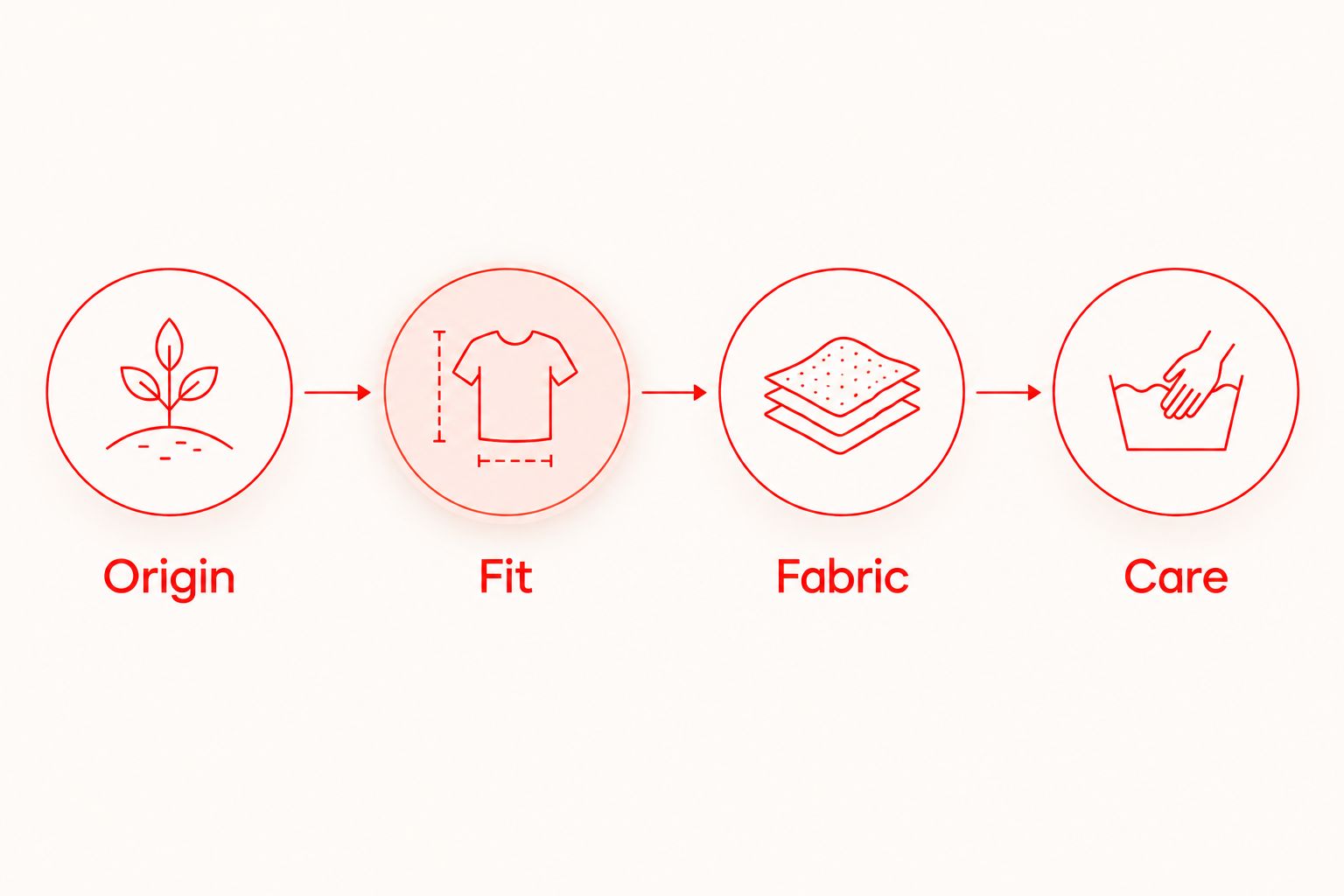
Check origin, fit, fabric, and care before choosing
Use this sequence after selecting a style. It separates facts you need to verify from preferences you already know.
- Origin: Read the manufacturing statement for the garment. Keep the maker’s location separate from the garment’s origin.
- Fit: Record your bust, waist, and hip measurements, then compare the sizing guidance. These 3 measurements help you move beyond a letter-size label.
- Fabric: Read the fiber composition and any information about lining or stretch. A fabric name alone does not answer every material question.
- Care: Read the garment’s care instructions. Decide whether you will realistically follow them.
For a useful fit comparison, measure a dress you already enjoy wearing. Follow the seller’s measurement method where one is provided, and distinguish body measurements from garment measurements. They answer different questions.
Finally, plan 2 outfits using shoes and layers you already own. This is a practical exercise, not a promise of versatility. If you cannot picture wearing the dress beyond its product photograph, pause before choosing it.
How the dresses are ranked
This ranking uses the named fabric, color, pattern, and style details to assign each dress a different role. Long Agnes leads for bold linen, Prairie for a dark neutral, and Belted Bias for a belted floral look.
Field Day’s stated focus on sustainable, USA-manufactured women’s apparel establishes the collection’s relevance to the query. The ranking does not claim comparative durability, superior sewing, or a particular environmental result. Those claims require evidence beyond a product name and brand description.
Which made in USA dress should you choose?
Choose Long Agnes Dress in Red Linen if you want the default bold-linen recommendation. Choose Prairie Dress in Black Linen when black is the requirement, or Belted Bias Dress in Brick Red Floral Crepe when the belt and print are the point.
The best 2026 choice is the dress whose measurements, material, and care instructions match your needs. Do not let the ranking override a clear fit mismatch.
FAQ
What are the best made in USA dresses in this guide?
Long Agnes Dress in Red Linen is the pick for bold linen, Prairie Dress in Black Linen for a dark neutral, and Belted Bias Dress in Brick Red Floral Crepe for a belted floral look. Choose by use case, then confirm the individual garment’s fit and care information.
Does Field Day offer petite and plus-size clothing?
Field Day’s stated apparel range includes petite and plus sizes spanning XS–5X. Check each dress’s sizing details rather than assuming the full range applies to every garment.
Is a black linen dress better than a red linen dress?
A black linen dress is the better match when you specifically want a dark neutral; red is the better match when you want a strong solid color. Neither color establishes better construction or fit.
Does challis or crepe tell me what fibers a dress contains?
No, challis and crepe do not by themselves establish fiber content. Read the garment’s composition information separately from its fabric name.
Does made in USA mean the fabric was made in the USA too?
Do not infer fabric origin from a general garment description. Check the precise origin statement and any separate information about where the fabric was produced.
How do I choose a dress size online?
Compare your body measurements with the garment’s sizing guidance and check any garment measurements provided. Use a dress you already enjoy wearing as an additional reference, while keeping body and garment measurements distinct.
Can I machine-wash a linen or crepe dress?
Follow the specific dress’s care instructions rather than assuming it is machine-washable. Fiber composition, dyes, trims, and construction all matter to garment care.
One last thing
A familiar size label is less useful than a familiar fit. Before choosing, take your favorite dress out of the closet and identify what makes it comfortable: room through the torso, waist placement, length, or ease of movement.
Use those details as your checklist. Buy for the body and routine you have, not for an imagined occasion that requires a different wardrobe.

